
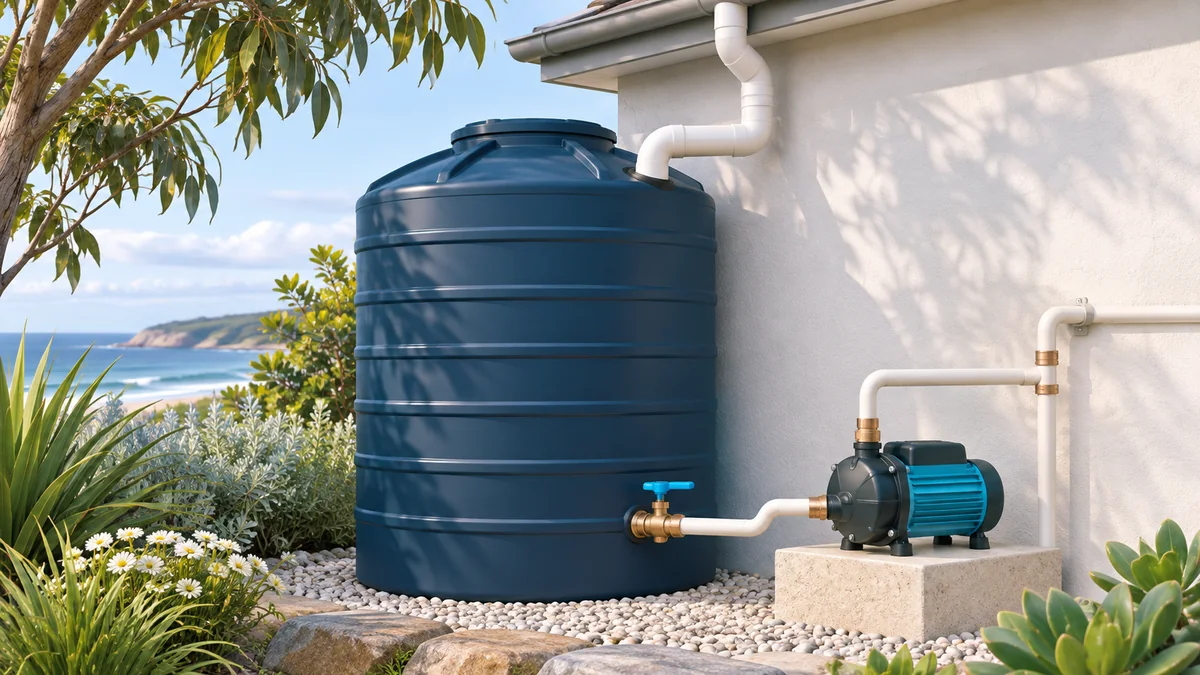
A water tank and pressure pump should be planned as one system, not two isolated purchases. Start with the source of the water, what it will be used for, the property’s demand and how the installation connects to existing plumbing. Those decisions influence equipment selection, safety measures and ongoing maintenance. A tank alone does not establish that water is suitable for drinking or every household purpose.
Identify the source and intended use
Municipal water stored for an intended purpose and an alternative source such as collected rainwater are not interchangeable arrangements. Describe the source accurately and list which fixtures or outdoor uses you hope to supply. The City’s alternative-water application page explains that alternative-water systems require its approval and that protection of drinking-water supplies is central to the process. Ask about the requirements before buying equipment or connecting an alternative source into a building.
Define the demand the pump must serve
Explain whether you want to supply one outlet, several bathrooms, irrigation or another purpose. Note when multiple outlets operate together and whether the existing problem is intermittent or constant. A larger motor label does not by itself identify the right solution. Ask the installer to explain the proposed selection against the actual demand and the complete plumbing arrangement. If the property has low municipal pressure, establish the cause before assuming that any pump installation is appropriate.
Make drinking-water protection a design question
Tell the professional about every existing source and connection, including any older tank or borehole plumbing. Do not join supplies simply because a pipe connection appears convenient. The City’s application guidance includes information about the required installation diagram and backflow-prevention arrangements for relevant systems. These are property-specific design and approval matters. Ask how the planned layout prevents unintended interconnection and how the completed system will be identified for future users and maintenance contractors.
Choose a location that remains practical
A tank needs a suitable installation position, while pumps and connected components need appropriate access. Discuss the base, pipe routing, overflow arrangement, noise considerations and access for maintenance. Keep the equipment’s installation requirements in the conversation. A location that is easy to hide may be difficult to service or inspect. For a complex or shared property, clarify ownership, access and approval arrangements before placing equipment in a common or restricted area.
Include maintenance and fault handling
Ask how the system is operated normally and what the owner should do if it stops working or leaks. Keep manuals, model details and the agreed layout. Establish which tasks need a professional and what routine observations can be made safely. A pump that cycles unexpectedly or a tank that loses water deserves assessment; repeatedly resetting equipment is not a diagnosis. Keep electrical work and equipment opening with the appropriate competent person.
Quote for the full arrangement
A useful quotation describes the intended use, equipment, plumbing work and any separate responsibilities or exclusions. Confirm who handles required applications and commissioning. HWS Plumbing offers water-tank repairs and pressure-pump services. If the immediate problem is water loss, consider a leak and pipe assessment first. Contact us with photographs, existing equipment details and a description of what you need the system to do.
Common questions
Does adding a tank automatically make its water suitable for every household use?+
No. The source, quality, storage and permitted use must be considered. A tank is not proof that the water is safe to drink.
Can a bigger pump solve every pressure problem?+
No. Establish the cause and the supply arrangement first. The appropriate equipment depends on the system and intended demand.
Sources & further reading
Need help with your plumbing?
Explore our plumbing services or contact HWS Plumbing to discuss your needs.