
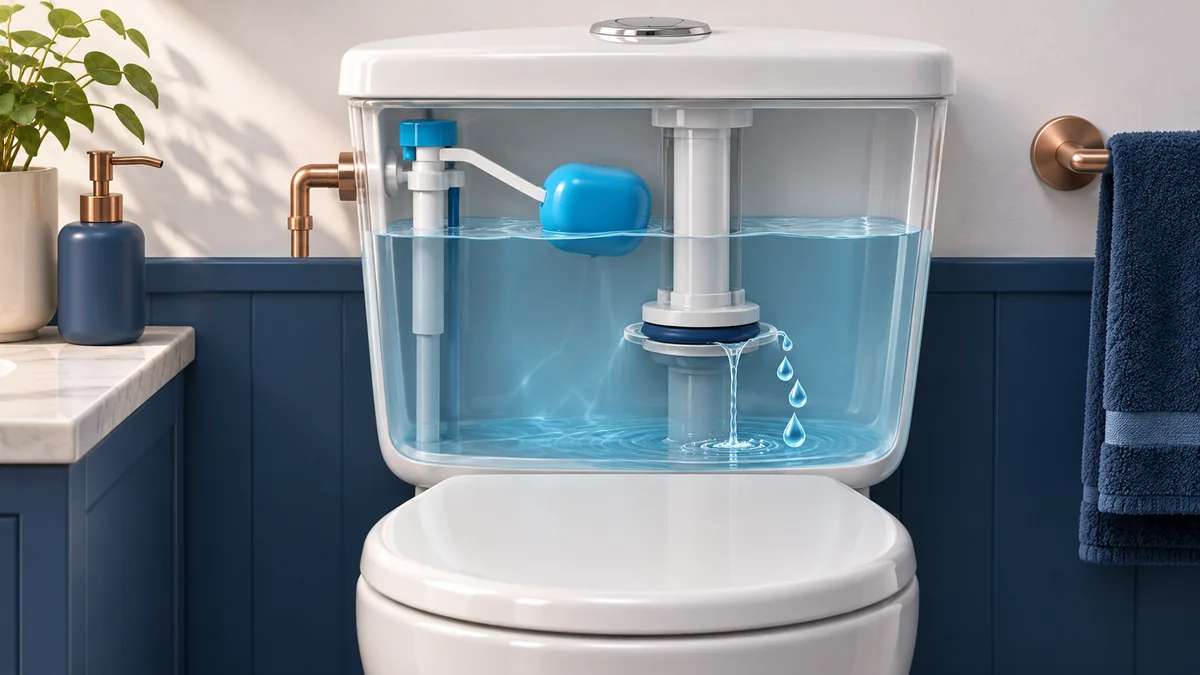
A toilet that continues filling, repeatedly refills without use or allows water to trickle into the bowl deserves attention. The symptom may come from a cistern component, a control or another part of the installation. Record what happens before ordering parts or replacing the whole toilet. A clear description helps distinguish an everyday repair from a more involved problem and avoids letting unnoticed water loss continue.
Observe one complete cycle
After the toilet is used, notice how the refill starts and whether it stops normally. If it later begins filling again without another flush, record roughly how often that occurs. Look from a safe, accessible position for water at the base, connections or surrounding floor. Water inside the bowl and water outside the toilet are different symptoms, so describe them separately. Do not assume that a puddle is harmless condensation without checking its pattern.
Identify the fitting without dismantling it
A photograph of the toilet and accessible flush control can help identify the type of installation. Keep any model information you already have. Concealed cisterns and older fittings may require different access and parts from a common exposed cistern. Do not pry open tiled panels or force brittle plastic components merely to take a picture. Tell the plumber if the toilet is wall-mounted, if the cistern is concealed or if access has previously been difficult.
Consider the effect on water use
A quiet leak can be easy to overlook because it does not necessarily leave water on the floor. The City’s leak-finding guide includes toilets among the household points to check. Avoid attaching a guessed daily cost or saving figure to the symptom: the actual loss and account effect depend on the fault and usage. The useful response is to identify the problem, repair it and then observe whether the unwanted flow has stopped.
Keep safe isolation practical
If the fixture has an accessible private isolation valve that you know how to operate safely, tell the plumber about it. Do not force a stuck valve or use improvised pressure on the fitting. If this is the only toilet in the home, mention that when arranging the visit so the inconvenience is understood. In a rental property, notify the owner or managing agent promptly and follow the agreed repair-authorisation process rather than letting the issue drift.
Ask what the repair includes
Discuss which component is affected, whether compatible replacement parts are available and whether any other defect has been found. A repair should address the identified fault, not simply change a part without explanation. If replacement of the whole fitting is recommended, ask why and what installation work is included. Keep photographs of the final arrangement and the product reference where useful. A small record makes any future recurrence easier to describe.
Make leak checks part of normal household care
Brief occupants and tenants to report a toilet that runs on after use rather than assuming somebody else has noticed. Include accessible toilet connections and under-basin areas in occasional household observations. The City’s water-saving information offers broader conservation guidance for home use. HWS Plumbing handles toilet repairs through our plumbing maintenance service. For concealed pipe concerns, see leak detection and pipe repairs, or send an enquiry with the symptoms and location.
Common questions
Is a constantly refilling toilet normal?+
A toilet should complete its normal refill cycle. Repeated or continuous refilling is a symptom worth checking rather than ignoring.
Should I replace the whole toilet when it runs?+
Not automatically. A fitting or component may be repairable. The appropriate option depends on the fault, condition and compatible parts.
Sources & further reading
Need help with your plumbing?
Explore our plumbing services or contact HWS Plumbing to discuss your needs.