
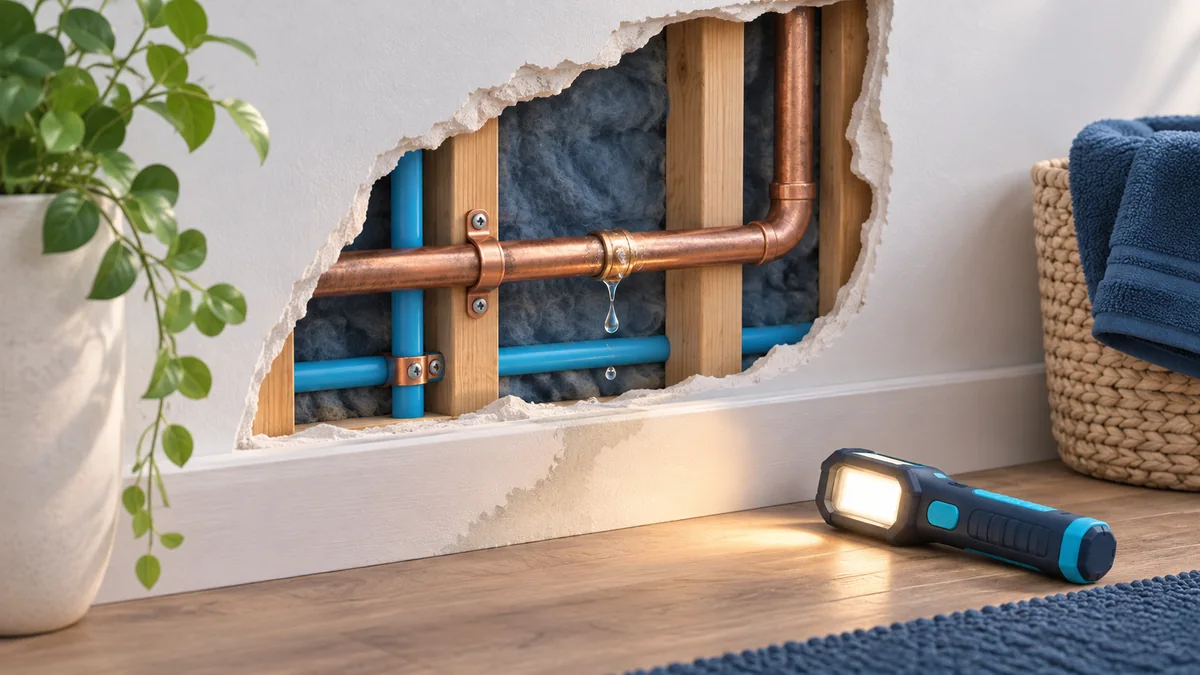
A hidden water leak is one possible explanation for unexplained water use, damp finishes or an unexpected bill. Begin with observations rather than breaking open a wall: compare the billing information, check accessible fixtures and note when the symptoms occur. Meter information can support an investigation, but it does not identify the exact leaking pipe or prove that every billing change is caused by a leak.
Compare like with like on the account
Look at the consumption period, the recorded reading and whether the account uses an actual or estimated reading. A longer period or a changed household routine can affect comparisons. Record visitors, irrigation changes and appliance use so the plumber has context. Keep the account information private; a photograph of the relevant reading is generally more useful for the plumbing discussion than sharing a complete municipal account containing unrelated personal details.
Know which type of meter you have
The City’s current water-meter guidance distinguishes traditional meters from AMI smart meters. For a traditional accessible meter, follow its reading instructions. Do not remove a smart-meter cover to try to see a screen: the City says smart-meter data is transmitted automatically, with customer access through its programme’s available channels. Avoid applying an old mechanical-meter tutorial to equipment that works differently. If the meter itself appears faulty, use the municipal reporting process.
Look for visible clues without causing damage
Check around accessible taps, toilet connections, under-sink cupboards and exposed pipework. Note water staining, persistent moisture or the sound of water when fixtures are idle. Do not assume that a damp patch marks the start of the leak: water can travel along a pipe or building surface. Equally, dampness may have causes outside the water-supply plumbing. A useful report describes the location, timing and appearance without deciding the cause in advance.
Make a quiet-period observation where appropriate
The City’s leak-finding guide explains a simple observation for traditional meters while water is not being used. Account for toilets refilling, appliances and other automatic use before drawing conclusions. Record what you observed and the times, rather than relying on memory. This is an indicator to discuss with a plumber, not permission to dismantle a meter, enter an unsafe chamber or alter municipal equipment. Shared supplies may need management input before results can be interpreted.
Ask what the leak assessment includes
Tell the plumber which areas are affected and whether concealed pipework is suspected. Ask how investigation will be approached, what access may be required and how any opening or reinstatement is handled. The appropriate repair depends on the pipe material, fault and surrounding condition. A promise to find every concealed leak without disturbance is not a substitute for a property-specific scope. Keep copies of findings and repaired-section photographs when available.
Check the outcome over time
After a repair, keep a new consumption baseline and note whether the original symptom returns. Allow for normal household changes rather than expecting the next account to match a guessed figure. If the bill still needs clarification, raise the account question with the City separately from the plumbing repair. HWS Plumbing provides leak detection and pipe repairs. Send us your observations, location and contact details so we can discuss an assessment.
Common questions
Does movement on a meter prove an underground leak?+
It can indicate water use when none is expected, but appliances, toilets, shared supplies and meter type must be considered before interpreting the result.
Should I open a new smart meter to take a reading?+
No. Follow the City’s current smart-meter guidance and use its supported customer or reporting channels rather than removing the cover.
Sources & further reading
Need help with your plumbing?
Explore our plumbing services or contact HWS Plumbing to discuss your needs.