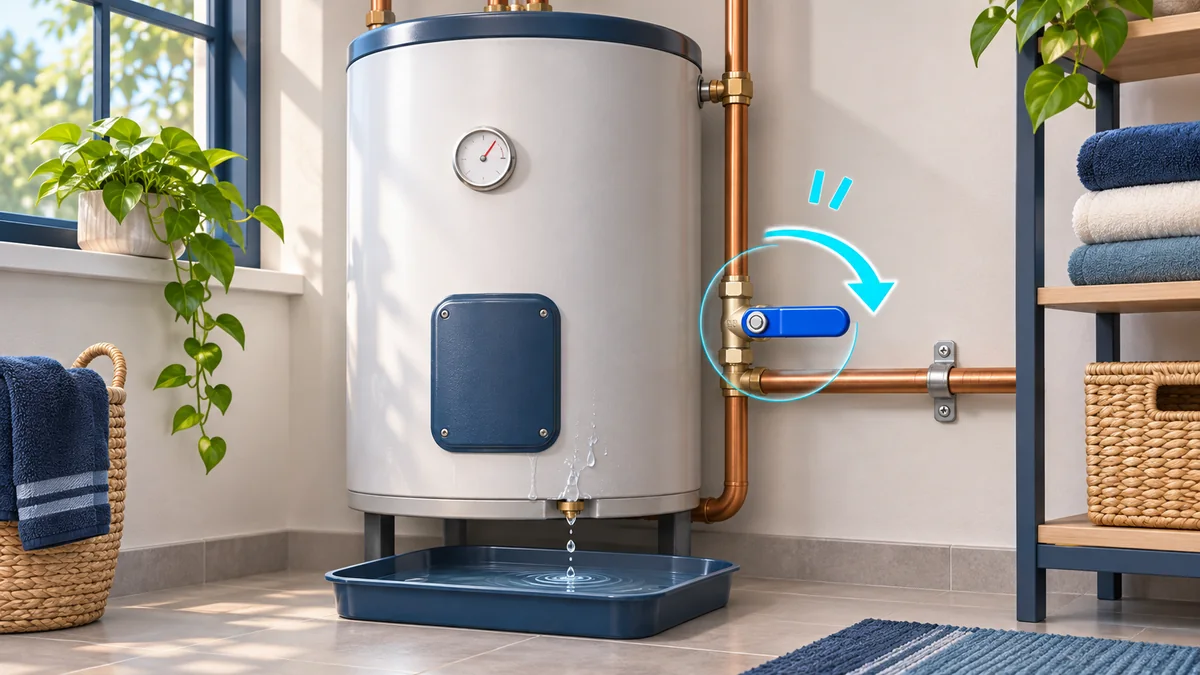
If a geyser is leaking heavily, keep away from water and electrical fittings and call a plumber. Describe where the water is appearing rather than assuming the cylinder itself has burst: pipework, connections and other components can also leak. A safe assessment establishes what has failed and whether repair or replacement is appropriate. Do not climb into an unsafe ceiling space to find out.
Put people ahead of the installation
Water can travel away from its source before becoming visible. A wet ceiling, cupboard or wall therefore needs care even when the geyser is in another part of the building. Keep children and pets away. Do not touch switches or appliances in the wet area. Any necessary electrical isolation or repair must be handled safely by the appropriate competent person; this guide is not an instruction to open electrical panels or geyser covers.
Explain what you can see
Tell the plumber whether water is dripping, running continuously or appearing only while hot water is used. Mention a sudden loss of hot water, unusual noise or a change in pressure, without treating these as a diagnosis. Share your location, the access arrangement and whether the geyser is in a roof, cupboard or external enclosure. The age, model and capacity are useful when known, but not worth taking a risk to obtain.
Use isolation only when it is familiar and safe
If you know the property’s private shut-off and can operate it safely, discuss that with the plumber. Do not force a valve or improvise a way to block a discharge pipe. Safety and control components must remain functional. In a flat or sectional-title property, notify the managing agent promptly because water may affect another unit and shared services may be involved. Describe the damage factually and keep a record of who was informed.
Repair and replacement are different decisions
A leaking connection may have a different solution from a failed cylinder. Ask what has been inspected, which component needs attention and why replacement is being recommended where applicable. A replacement should consider household demand, available space and the installation around the unit. The cheapest cylinder price alone does not describe the complete job: access, pipework, valves and any separate electrical work may affect the agreed scope.
Keep paperwork in the conversation
Photograph visible damage from a safe location and retain invoices and equipment details. If you intend to make an insurance claim, contact your insurer about its process; do not assume a claim will be accepted or that any contractor is automatically approved. The City publishes an approval process for newly completed or altered water installations, including relevant hot-water work. Ask who will handle applicable documentation and inspection arrangements for your installation.
Plan what happens after the immediate repair
Before the work is closed off, confirm what was repaired, how the system was checked and whether follow-up work remains. Where a ceiling or cabinet has been affected, plumbing repair and building reinstatement may be separate tasks. Keep the new unit’s manual, model and warranty conditions together. HWS Plumbing assists with geyser repairs and installations in Gordon’s Bay and surrounding areas. For an active leak, use our emergency contact to discuss attendance.
Common questions
Does every leak mean the geyser must be replaced?+
No. The source may be a connection, pipe or another component. An assessment is needed before deciding what work is appropriate.
Can I block a leaking geyser outlet temporarily?+
Do not cap, obstruct or alter an outlet or safety component. Keep clear and explain the problem to the plumber so the installation can be assessed safely.
Sources & further reading
Need help with your plumbing?
Explore our plumbing services or contact HWS Plumbing to discuss your needs.